Raoul Dobal · 29 September 2026
Where Should Europe Deploy Humanoids First?
A thought experiment about where humanoid robots could help experienced workers keep essential services running.
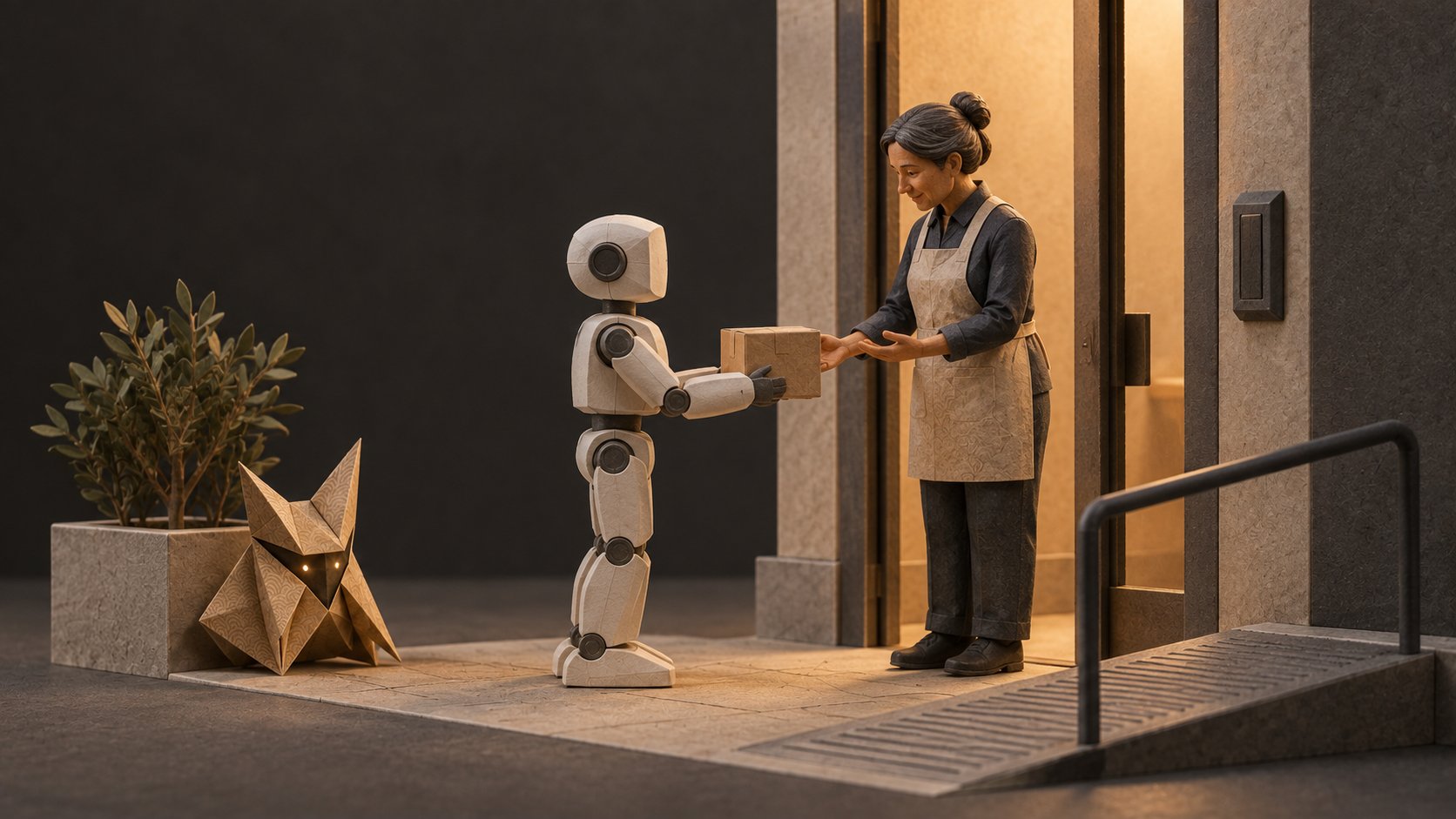
We were sitting around the table at a barbecue, talking about those Chinese robots on YouTube and how wonderful it would be if they could do the dishes afterwards. Somewhere along the way, the conversation got more serious. As more people retire, will we have enough people to keep our industries and everyday services running?
The OECD expects working-age populations to shrink across much of Europe. I wonder where humanoids could start helping us keep that work covered.
Let us make this a thought experiment: suppose that in two years these robots can carry out their assigned deliveries reliably, with practically no human intervention and at a cost that makes sense. Imagine a delivery driver with parcels for several businesses in the same building, each on a different floor.
With two humanoids accompanying them, the driver could send each to a different floor to ring the bell and hand over a parcel, or leave it where the recipient has instructed. While they did that, the driver could plan the next part of the route, resolve a delivery problem or attend to a customer who needed to speak to someone. For these specific tasks, the driver would almost be able to clone themselves.
Stairs and door handles are built for people. A humanoid able to use them could work in the building as it stands. Wheels or a different shape might be better elsewhere, but this is what interests me about humanoids: how much of the workplace is already fitted to their shape.
I wonder where else this could work, including in jobs that take years to learn. An experienced person may spend part of the day carrying, fetching or setting things up before they can get on with the work that needs their expertise.
In your field, which task is already difficult to keep staffed, and could one experienced person working with a couple of humanoids help keep it covered?
First published on LinkedIn on 29 September 2026. The delivery example is a thought experiment, not a forecast of robot capability.